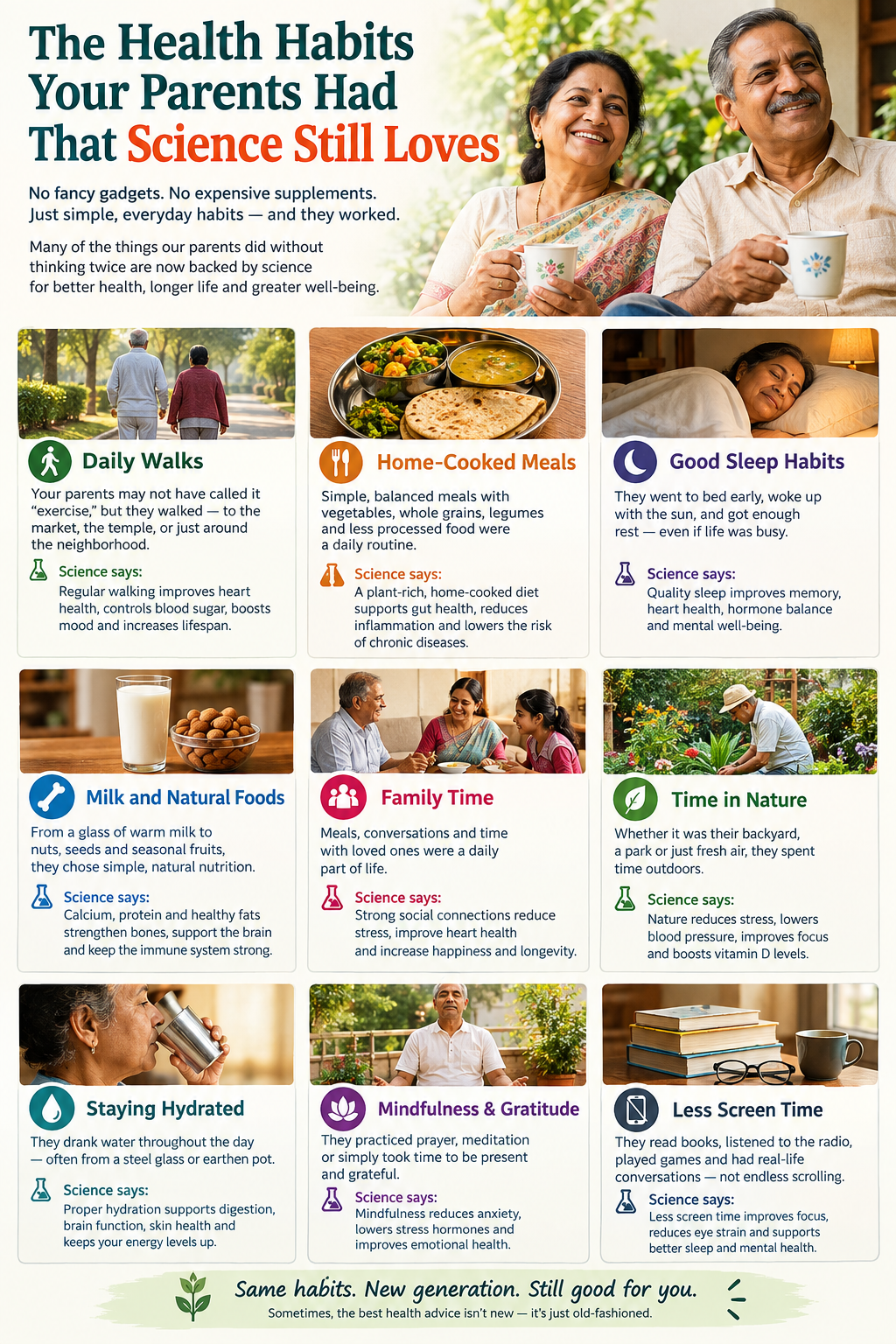
The Health Habits Your Parents Had That Science Still Loves
Turns Out, Mom Was Right About Quite a Few Things
Remember when your parents insisted that you sleep early, eat home-cooked food, go outside for some sunlight, and stop staring at screens all day?
Back then, most of us rolled our eyes and thought they were simply being overprotective. Fast forward to adulthood, and we're spending money on wellness trends, sleep trackers, gut-health supplements, and productivity hacks—many of which are trying to bring us back to habits our parents practised without even calling them "wellness."
Sometimes, the best health advice doesn't come from the latest trend on social media. Sometimes, it comes from the simple routines we grew up with.
And science? It happens to agree.
Eating Home-Cooked Meals Was Never "Old-Fashioned"
There was a time when eating outside was reserved for special occasions. Home-cooked meals were simply the norm.
Today, with busy schedules and endless food delivery options, convenience often wins. But science continues to show that regularly eating balanced, home-prepared meals can support better nutrition and healthier eating habits.
Home-cooked meals are often:
- More balanced.
- Less processed.
- Easier to portion appropriately.
- Richer in fresh ingredients.
Your parents may not have called it "mindful eating," but they knew that what you eat every day matters more than what you eat occasionally.
Sleeping Early Is Still One of the Best Wellness Hacks
"Why are you awake at midnight?" is practically a universal parent question.
While staying up late may feel productive or entertaining, our bodies are designed to function best when we maintain consistent sleep schedules.
Getting quality sleep supports:
- Better concentration.
- Improved mood.
- Healthy immune function.
- Overall physical and mental well-being.
The truth is, there isn't a shortcut for good sleep. Despite all the wellness products available today, one of the most effective habits remains surprisingly simple—getting enough rest.
Sometimes, your mother saying "Go to bed early" was better advice than half the sleep tips on the internet.
Playing Outside Was Exercise in Disguise
Growing up, being outdoors wasn't considered exercise—it was simply part of everyday life.
Whether it was cycling, running around the neighbourhood, or spending hours playing with friends, movement happened naturally.
Today, many of us spend most of our day sitting—at work, in classrooms, or scrolling on our phones.
Science consistently supports what our parents encouraged:
- Moving regularly improves physical health.
- Outdoor activities can positively influence mood and energy levels.
- Spending time away from screens benefits both body and mind.
You don't necessarily need an expensive fitness routine to start feeling better. Sometimes, a simple walk outside is a great place to begin.
"Finish Your Water" Was Good Advice
If there's one thing almost every parent has said, it's this:
"Have you been drinking enough water?"
Hydration might not sound exciting, but it plays an essential role in how we feel every day.
Staying adequately hydrated can support:
- Energy levels.
- Digestion.
- Physical performance.
- Overall well-being.
It's one of the simplest health habits, yet one of the easiest to overlook in a busy lifestyle.
Eating Together Was About More Than Food
Family meals weren't just about what's on the plate.
They offered an opportunity to slow down, have conversations, and take a break from the rush of daily life.
Today, many of us eat while working, scrolling through our phones, or rushing between commitments.
Taking time to eat mindfully can help us:
- Pay attention to hunger and fullness cues.
- Enjoy meals more fully.
- Create healthier relationships with food and daily routines.
Sometimes, slowing down is just as important as eating the right foods.
Rest Was Never a Sign of Laziness
Parents often encouraged us to rest when we weren't feeling well.
As adults, many of us have developed the opposite mindset. We glorify being busy and feel guilty when we're not being productive.
The reality is that rest isn't something we earn only after burnout. It's something our bodies need regularly.
Science continues to emphasise the importance of:
- Quality sleep.
- Recovery.
- Managing stress.
- Maintaining a healthy work-life balance.
Rest is productive when it supports your health.
Wellness Trends Come and Go—Good Habits Don't
Every year brings a new wellness trend promising better health in record time.
But some habits have quietly stood the test of time:
- Eating nutritious meals.
- Sleeping well.
- Staying active.
- Drinking enough water.
- Spending time outdoors.
- Making time to rest.
They may not sound revolutionary, but they're remarkably effective.
The simplest health habits are often the most sustainable ones.
The Bottom Line
It's funny how adulthood has a way of making us appreciate the advice we once ignored.
Many of the habits our parents encouraged weren't based on health trends or wellness influencers—they were practical routines that supported everyday well-being. Today, science continues to reinforce just how valuable these simple practices can be.
You don't always need to overhaul your lifestyle to take better care of yourself. Sometimes, it starts with going back to the basics.
So the next time you hear yourself saying, "My parents used to tell me that," don't be surprised if science is nodding in agreement.
After all, good health isn't always about doing more. Sometimes, it's about remembering the simple things that worked all along.